Quiet Fidget Toys for Classroom: Teacher-Approved Focus Tools 2026
Dr. Lisa Wang
Author
The Growing Role of Fidget Tools in Education
In classrooms across the country, a quiet revolution is taking place. Teachers are increasingly recognizing that movement and tactile stimulation are not the enemy of learning but powerful allies. Quiet fidget toys have moved from the margins to the mainstream, becoming an accepted and even encouraged part of the learning environment in 2026.
The shift did not happen overnight. It is the result of decades of research in occupational therapy, neuroscience, and education, combined with a growing understanding of how different children learn. Today, many teachers view fidget tools as essential classroom supplies, right alongside pencils, notebooks, and erasers.
This guide explores the science behind fidgeting in the classroom, what makes a fidget toy truly classroom-appropriate, and the best products available for students of different ages and needs.
The Science of Fidgeting and Learning
Why Children Need to Move to Think
The traditional image of a good student sitting perfectly still with hands folded is not supported by science. Research in developmental psychology has consistently shown that movement is closely linked to cognitive function, especially in children.
A study published in the Journal of Abnormal Child Psychology found that children with ADHD who were allowed to move performed better on working memory tasks than those who were required to sit still. More importantly, the same study found that the benefits of movement extended to children without ADHD, suggesting that fidgeting is a natural learning aid for all students.
Sensory Processing and Academic Performance
Every child has a unique sensory profile. Some children are sensory seekers who crave tactile, proprioceptive, or vestibular input. Others are sensory avoiders who become overwhelmed by too much stimulation. Most children fall somewhere in between, with sensory needs that fluctuate throughout the day.
When a child's sensory needs are not met, they may struggle to focus, become restless, or act out. Fidget tools provide a controlled, appropriate outlet for sensory needs, allowing the child to self-regulate without disrupting the classroom. By addressing the sensory component of attention, fidget tools can remove a significant barrier to learning.
The Role of the Reticular Activating System
The reticular activating system (RAS) is a network of neurons in the brainstem that plays a crucial role in regulating arousal and attention. When the RAS is under-stimulated, the brain struggles to maintain alertness, leading to daydreaming and inattention. When it is over-stimulated, the result is anxiety and distractibility.
Fidgeting provides just enough additional sensory input to keep the RAS at an optimal level of arousal. This is why students often doodle, tap their feet, or fidget with objects during lectures. They are not misbehaving. Their brains are actively working to maintain the level of stimulation needed for learning.
What Makes a Fidget Toy Classroom-Appropriate
The Silence Requirement
The single most important quality of a classroom fidget toy is silence. In a room of twenty to thirty students, even a small amount of noise from a fidget toy can be disruptive. Clicking, squeaking, rattling, or crinkling sounds are immediately noticeable and can distract both the teacher and other students.
The best classroom fidget toys produce zero sound. They rely on tactile feedback rather than auditory feedback, allowing the student to engage with them without anyone else knowing. Silent putty, smooth silicone toys, and fabric-based fidgets are all excellent choices for noise-sensitive environments.
Non-Visual Distraction
A good classroom fidget toy should not require the student to look at it. Tools that flash, spin visually, or require hand-eye coordination to operate can pull the student's attention away from the lesson. The ideal fidget can be used entirely by feel, keeping the student's eyes and attention on the teacher or their work.
Durability and Safety
Classroom fidget toys need to withstand heavy use by energetic children. They should be made from non-toxic materials and should not have small parts that could break off and become choking hazards, especially for younger students. Products should be tested for durability and should not degrade, tear, or lose their sensory properties after repeated use.
Age Appropriateness
Fidget tools should be matched to the developmental level of the student. What works for a high school student may not be appropriate or safe for a first grader, and vice versa. Younger children benefit from simpler, more durable tools with stronger sensory feedback, while older students may prefer more sophisticated options that provide varied tactile experiences.
Affordability and Accessibility
The best fidget tools are affordable enough that schools can provide them to students who need them, and accessible enough that parents can purchase them without financial strain. Many effective classroom fidgets cost less than ten dollars, making them a cost-effective intervention compared to other academic support strategies.
Top Quiet Fidget Toy Recommendations for the Classroom
Silent Putty and Therapy Dough
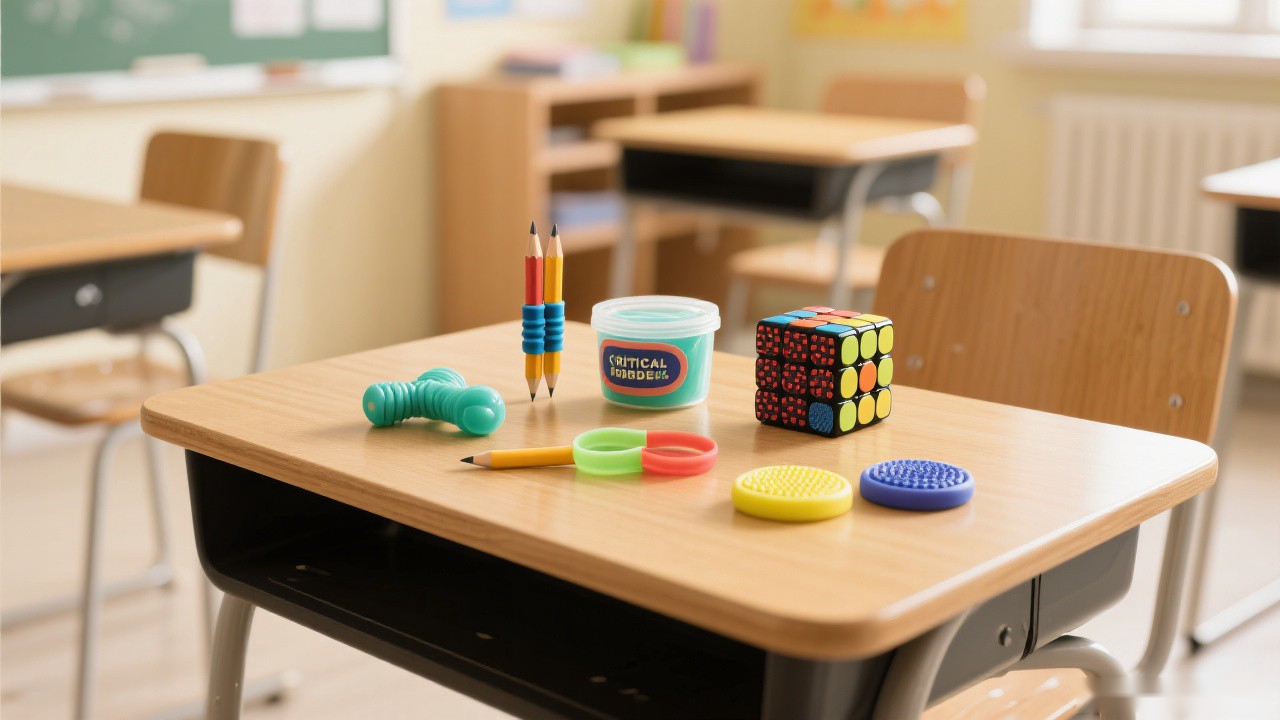
Silent putty, also known as therapy dough or thinking putty, is one of the most versatile classroom fidget tools available. It can be squeezed, stretched, rolled, and shaped, providing a wide range of tactile experiences. High-quality therapy putty is completely silent and comes in resistance levels from soft to firm, allowing teachers to match the putty to each student's sensory needs.
For classroom use, putty should be stored in a small, sealed container to prevent it from drying out or sticking to surfaces. Teachers can provide each student with a small portion in a plastic container that stays in their desk. Putty is particularly effective during independent reading or writing time, when students need sustained focus.
The therapeutic benefits of putty go beyond simple fidgeting. Squeezing and manipulating putty strengthens hand muscles, which supports handwriting development in younger students. For older students, the resistance of firmer putty provides deep pressure input that can be calming during stressful situations like tests or presentations.
NeeDoh Squishy Toys
NeeDoh products, particularly the Nice Cube and the original Groovy Glob, have become favorites among teachers and occupational therapists. These silicone-based squishy toys are completely silent, durable, and provide a satisfying sensory experience that helps students self-regulate.
The NeeDoh Nice Cube is especially popular in classrooms because of its compact size and clean design. It fits easily in a student's hand or pocket and can be used discreetly under a desk during lessons. The consistent resistance of the silicone provides reliable sensory feedback, and the material is easy to clean and sanitize between users.
For younger students, the NeeDoh Groovy Glob offers a larger, easier-to-grip shape. Its smooth, round form is pleasant to hold and manipulate, making it a good choice for students who are still developing fine motor skills. Both products are made from food-grade silicone that is free of BPA, phthalates, and latex, making them safe for classroom use.
Sensory Chair Bands
Sensory chair bands, also known as bouncy bands or fidget bands, are elastic bands that stretch across the front legs of a student's chair. Students can bounce their feet against the band, providing kinesthetic and proprioceptive input without leaving their seat.
Chair bands are brilliant for the classroom because they are completely invisible and silent. The student is the only one who knows they are using a fidget tool, which eliminates any stigma or self-consciousness. The repetitive bouncing motion helps students burn off excess energy while maintaining the physical stillness that classroom instruction requires.
Research on sensory chair bands has shown promising results. A study published in the Journal of Occupational Therapy in Schools and Early Intervention found that students who used chair bands showed significant improvements in on-task behavior compared to students who did not use them. Teachers in the study reported that chair bands were particularly helpful during sedentary activities like reading and test-taking.
Silent Fidget Cubes
Fidget cubes are small, multi-sided tools with different tactile features on each face. While traditional fidget cubes have clicking buttons and switches that produce noise, silent versions are specifically designed for classroom use. These feature smooth-moving components like sliding discs, textured surfaces, and silent rollers that provide tactile feedback without any sound.
The variety of activities on a single cube makes it an engaging tool for students who get bored with simpler fidgets. Each face offers a different sensation, so students can switch between textures and motions throughout the day. Silent fidget cubes are available in child-friendly colors and are small enough to fit in a pencil case or pocket.
Tactile Discs and Sensory Stones
Tactile discs are small, flat discs with textured surfaces that students can rub, press, or trace with their fingers. They are among the most discreet fidget tools available because they can be placed under a piece of paper on a student's desk, providing tactile input without being visible.
Sensory stones serve a similar purpose. These smooth, weighted stones come in various shapes and textures and can be held in one hand during lessons. The weight provides deep pressure input that many students find calming, while the texture offers tactile stimulation. Both options are silent, durable, and appropriate for students of all ages.
Wobble Cushions
Wobble cushions, also called stability cushions or sensory seats, are inflatable cushions that students sit on. The slight instability requires the student to make constant micro-adjustments with their core muscles, providing proprioceptive and vestibular input throughout the school day.
While wobble cushions are not completely silent, the noise they produce is minimal and typically masked by normal classroom activity. They are most effective for students who have high energy levels and struggle to sit still for extended periods. Many teachers use wobble cushions as part of a flexible seating arrangement, allowing students to choose the seating option that best supports their learning.
Fidget Pencil Toppers
Fidget pencil toppers are small attachments that slide onto the end of a pencil, providing a fidget tool that is always within reach. They come in various forms, including textured grips, spinning tops, and squishy caps. The best options for classroom use are those that are silent and do not interfere with writing.
Pencil toppers are an excellent choice for students who need frequent sensory breaks but may forget to use a separate fidget tool. Because the fidget is attached to their pencil, it is always available when needed. Teachers appreciate pencil toppers because they serve a dual purpose, functioning as both a writing aid and a sensory tool.
Choosing the Right Fidget Tool by Age Group
Preschool and Kindergarten (Ages 3-5)
For the youngest students, safety is the top priority. Avoid any fidget toys with small parts that could be a choking hazard. The best options for this age group include large, durable squishy toys, textured sensory balls, and therapy putty in soft resistance levels. These tools help develop fine motor skills while providing the sensory input that young children need to stay engaged during circle time and structured activities.
Elementary School (Ages 6-11)
Elementary students benefit from a wider variety of fidget tools. Silent putty, NeeDoh squishy toys, sensory chair bands, and tactile discs are all excellent choices. At this age, students can begin to understand and communicate their sensory needs, so involving them in the selection process can increase the effectiveness of the tool. Teachers should introduce fidget tools with clear guidelines about when and how to use them.
Middle School (Ages 12-14)
Middle school students often face increased academic demands and social pressures that can make fidgeting more important than ever. However, this age group is also more self-conscious about standing out. Discreet options like fidget rings, pencil toppers, and small tactile tools that can be kept in a pocket are ideal. The goal is to provide sensory support without drawing unwanted attention from peers.
High School (Ages 15-18)
High school students have the maturity to self-regulate with minimal supervision, making a broader range of fidget tools appropriate. Silent fidget cubes, therapy putty, and under-desk foot rollers are all good options. At this level, many students can advocate for their own sensory needs and may already have preferred fidget tools that they use during study time.
Sensory Integration Theory and Classroom Fidget Tools
Understanding Sensory Integration
Sensory integration theory, developed by occupational therapist Dr. Jean Ayres in the 1970s, explains how the brain processes and organizes sensory information from the body and environment. According to this theory, efficient sensory integration is essential for learning, behavior, and emotional regulation.
When a child's sensory system is not functioning optimally, they may struggle with attention, emotional control, motor coordination, and social interaction. Fidget tools address this by providing targeted sensory input that supports the integration process. For example, a student who is under-responsive to tactile input may benefit from a textured fidget tool, while a student who is under-responsive to proprioceptive input may benefit from a weighted or resistance-based tool.
The Seven Senses and Fidgeting
While most people are familiar with the five basic senses, occupational therapists recognize seven senses that are relevant to learning and behavior. In addition to sight, hearing, taste, smell, and touch, the proprioceptive sense (body awareness) and vestibular sense (balance and movement) play crucial roles in classroom behavior.
Fidget tools primarily target the tactile and proprioceptive senses. Squeezing a NeeDoh toy provides tactile input, while the resistance of therapy putty engages proprioceptive receptors in the hands and fingers. Wobble cushions and chair bands provide vestibular and proprioceptive input through movement. By addressing multiple sensory systems simultaneously, fidget tools can create a more comprehensive regulatory effect.
Evidence-Based Practice
The use of fidget tools in classrooms is supported by a growing body of evidence. A systematic review published in the American Journal of Occupational Therapy found that fidget tools had a positive effect on attention and academic performance in students with ADHD. While more research is needed for neurotypical students, the existing evidence is promising and consistent with the theoretical framework of sensory integration.
Navigating School Policies on Fidget Tools
Understanding Your School's Stance
School policies on fidget tools vary widely. Some schools have embraced them as part of their commitment to inclusive education, while others maintain strict policies that limit or prohibit their use. Before sending fidget toys to school, parents should familiarize themselves with their school's policy and communicate with their child's teacher.
Advocating for Fidget Tools
If your child's school does not currently allow fidget tools, there are steps you can take to advocate for their use. Start by sharing research on the benefits of fidgeting for focus and self-regulation. Offer to provide silent, non-distracting options for a trial period. Many teachers are open to trying new strategies when presented with evidence and a clear plan.
For students with documented disabilities, fidget tools may be included in an Individualized Education Program (IEP) or a 504 Plan. In these cases, the school is legally required to provide the accommodations outlined in the plan, which may include access to fidget tools during class.
Teacher Guidelines for Implementation
Teachers who are introducing fidget tools to their classrooms should follow a structured approach. Begin by educating students about what fidget tools are and why they are used. Establish clear rules about when and how they can be used. Monitor students during the initial period to ensure the tools are helping rather than distracting. Be prepared to make adjustments, including removing a tool if it is not working for a particular student.
It is also important to frame fidget tools positively. Rather than presenting them as a reward or a special accommodation, normalize them as everyday learning tools that help all students do their best. This reduces stigma and encourages students to use them as intended.
Best Practices for Parents and Teachers
Collaboration Is Key
The most successful fidget tool implementations happen when parents and teachers work together. Parents can provide insight into their child's sensory preferences and needs, while teachers can monitor how the tools are being used in the classroom and provide feedback on their effectiveness.
Regular Check-Ins
Fidget tools are not a set-it-and-forget-it solution. Regular check-ins between parents, teachers, and students help ensure that the tools are still meeting the student's needs. As children grow and develop, their sensory needs change, and the fidget tools that worked last semester may need to be replaced or supplemented.
Building a Fidget Tool Kit
Rather than relying on a single fidget tool, consider building a small toolkit that the student can draw from throughout the day. A typical toolkit might include a NeeDoh Nice Cube for stressful moments, therapy putty for independent work time, and a sensory band on their chair for sustained sitting. Having options allows the student to match the tool to their current sensory state.
Conclusion
Quiet fidget toys have earned their place in the modern classroom. Backed by sensory integration theory and supported by a growing body of research, these tools offer a simple, effective way to help students of all ages and abilities stay focused, regulated, and engaged in learning. By choosing silent, discreet, and age-appropriate options, teachers and parents can provide students with the sensory support they need to succeed academically and socially.
The key to success lies in thoughtful selection, clear guidelines, and ongoing collaboration between educators, parents, and students. When implemented well, fidget tools are not a distraction from learning but a pathway to it.
Frequently Asked Questions
Are fidget toys allowed in most classrooms?
Policies vary by school and district, but many teachers now embrace quiet fidget tools as part of differentiated instruction. The key is choosing silent, non-distracting options that help the student focus without disrupting classmates. Always check with your child's teacher before sending fidget toys to school.
What makes a fidget toy classroom-appropriate?
A classroom-appropriate fidget toy must be silent, discreet, durable, and safe. It should not produce noise, require visual attention, or distract other students. It should also be age-appropriate and free of small parts that could be a choking hazard for younger children.
Can fidget toys help students without ADHD or learning differences?
Yes. While fidget tools are especially beneficial for students with ADHD, autism, or sensory processing differences, research shows that tactile stimulation can improve focus and reduce anxiety for all students. Many teachers report that quiet fidget tools help the entire class stay engaged during long lessons.
How should teachers introduce fidget toys to the classroom?
Teachers should start by establishing clear rules about when and how fidget tools can be used. Introduce them as learning tools, not toys. Demonstrate proper use, set boundaries, and monitor students to ensure the tools are helping rather than distracting. A trial period with specific guidelines works well.
What are the best quiet fidget toys for elementary students?
For elementary students, silent putty, sensory bands for chairs, textured tactile discs, and NeeDoh squishy toys are excellent choices. These options are safe, silent, and provide the right level of sensory input for younger learners.