Infinity Cube Fidget Toy: Why This Folding Cube Went Viral 2026
James Rodriguez
Author
I have a drawer in my desk that most people would find embarrassing. It contains roughly 200 fidget toys. Spinners, cubes, balls, worms, sliders, clickers, magnetic rings, putty in six different colors. My wife calls it my toy box. My kids raid it regularly. My coworkers think I am a little odd.
But here is the thing. Of all those 200 fidget toys, the one I reach for most often is a brushed aluminum infinity cube I bought for eighteen dollars on Amazon three years ago. It has outlasted every spinner I have owned. It has survived being dropped on concrete, left in a hot car, and borrowed by my seven-year-old for an entire summer. The hinges are still tight. The finish is still smooth.
If you are new to fidget toys or you have been curious about infinity cubes specifically, this guide is everything I have learned from years of daily use and obsessive comparison shopping.
What Is an Infinity Cube?
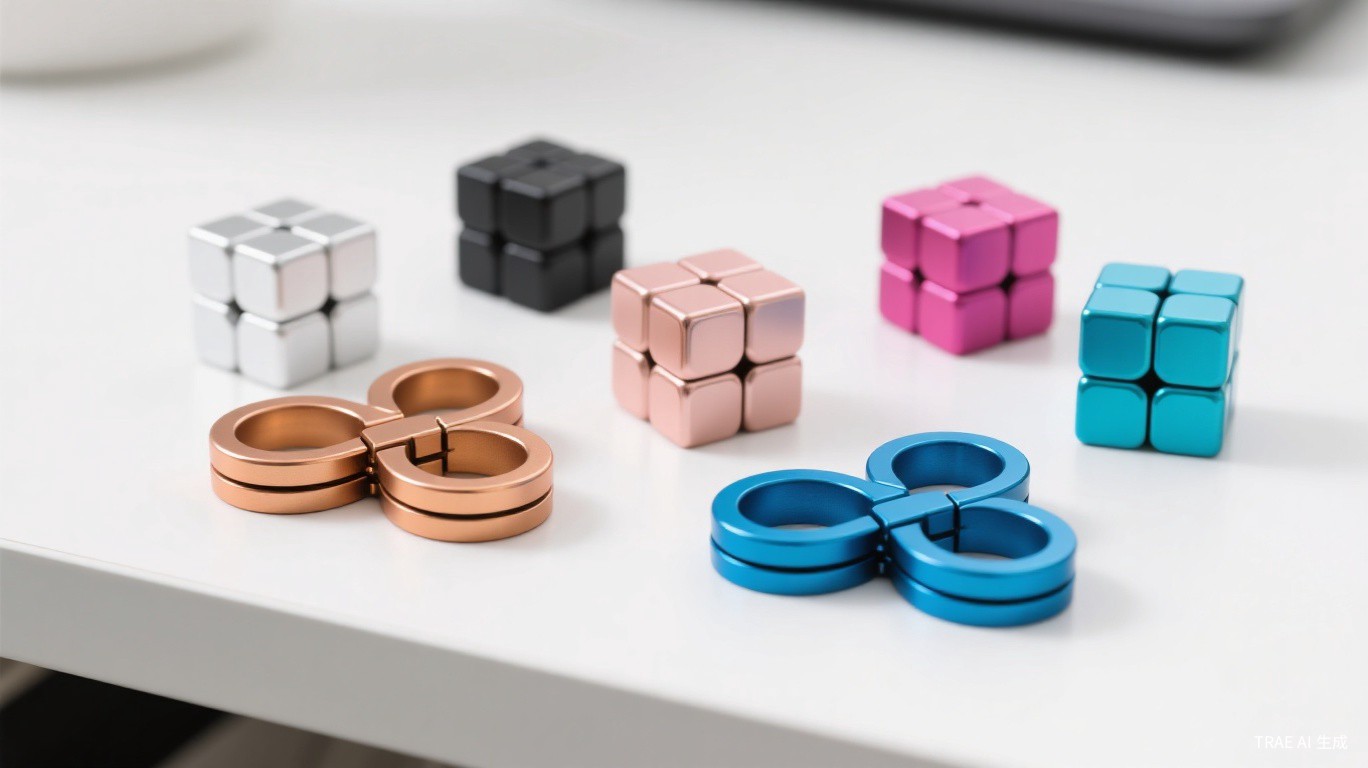
An infinity cube is exactly what it sounds like. It is a small cube made of eight equally sized sub-cubes connected by flexible hinges. You fold it, and it keeps folding. You flip it, and it cascades. You can fold it from any direction, and the motion loops back on itself infinitely. Hence the name.
The design is deceptively simple. Eight cubes. Some hinges. That is it. But the way those eight cubes move together is deeply satisfying in a way that is hard to describe until you hold one in your hands. It is the kind of toy you pick up for thirty seconds and then suddenly realize twenty minutes have passed.
The infinity cube concept has been around in various forms for decades, but it exploded in popularity around 2017 when fidget toys in general were having their moment. The original wave was mostly cheap plastic versions sold at gas stations and novelty shops. The quality was terrible. Hinges broke after a week. The plastic felt gritty.
The market has matured significantly since then. You can now find infinity cubes in aluminum, stainless steel, titanium, copper, and even wood. The hinge quality has improved dramatically, and some manufacturers have figured out how to make the folding motion buttery smooth.
How the Folding Mechanism Works
Each sub-cube is connected to its neighbors through a hinge that runs along one edge. The hinges are arranged so that when you fold one pair of cubes over, the geometry of the assembly allows the next pair to fold in sequence. It creates a cascading waterfall effect that is both visually and tactilely satisfying.
The key to a good infinity cube is the hinge tension. Too loose and the cubes flop around without any resistance. Too tight and you have to force the folds, which gets tiring after a few minutes. The sweet spot is a hinge that offers mild resistance and then gives way smoothly, letting the cubes fall into place with a quiet, satisfying click.
I have tested cubes where the hinges are perfect right out of the box and cubes where the hinges need a break-in period of a few days. Metal cubes tend to have more consistent hinge quality than plastic ones, which is one of the main reasons I recommend spending a few extra dollars on a metal model.
Materials: Metal vs Plastic vs Titanium
This is the most important decision when buying an infinity cube, and it is where most people get it wrong the first time. Let me break down each material based on my experience with multiple examples of each.
Plastic Infinity Cubes
The entry-level option. You can find plastic infinity cubes for anywhere from three to ten dollars. They are lightweight, come in bright colors, and are fine for kids or for trying out the concept without committing real money.
The problems start quickly. Plastic hinges wear out fast. After a few weeks of daily fidgeting, most plastic cubes develop wobbly, loose hinges that make the folding motion feel sloppy. The plastic itself can feel cheap and slippery. Some of the budget ones have a chemical smell that takes days to dissipate.
That said, I keep a few plastic cubes around for situations where I do not want to risk my good ones. Beach trips. Camping. Letting friends borrow one. They serve a purpose, but they are not what I would call a serious fidget tool.
Price range: Three to ten dollars. Best for: Kids, trying out the concept, situations where loss or damage is likely.
Aluminum Infinity Cubes
This is the sweet spot for most people. Aluminum infinity cubes typically cost between twelve and twenty-five dollars. They have a satisfying heft without being too heavy. The metal surface feels cool and smooth in your hand. And the hinge quality on most aluminum cubes is a massive step up from plastic.
My daily driver is an aluminum cube. The brushed finish has developed a slight polish in the spots where my fingers rest most often, which I actually like. It shows the toy has been loved.
The main downside of aluminum is that it dents if you drop it on hard surfaces. I have a few small dings on mine from when it has slipped off my desk. They do not affect function, but if you are particular about appearances, it is something to be aware of.
Price range: Twelve to twenty-five dollars. Best for: Daily use, most adults, office and home environments.
Stainless Steel Infinity Cubes
Heavier and more durable than aluminum. A stainless steel infinity cube has a weight to it that feels premium and substantial. If you like your fidget toys to have a bit of gravity, steel is the way to go.
The extra weight also adds a satisfying momentum to the folding motion. When you flip a stainless steel cube, the weight of the cubes falling into place creates a more deliberate, impactful feel compared to the lighter aluminum versions.
The trade-off is weight. A stainless steel cube can be tiring to fidget with for extended periods if you are holding it in one hand. I tend to use mine at my desk where I can set it down between folding sessions.
Price range: Twenty to forty dollars. Best for: Desk use, people who prefer heavier fidgets, those who want maximum durability.
Titanium Infinity Cubes
The premium tier. Titanium infinity cubes cost between forty and eighty dollars, and they are genuinely the best infinity cubes money can buy. Titanium is lighter than stainless steel but stronger than aluminum. The surface has a unique feel that is slightly warm and almost silky.
The hinge quality on titanium cubes tends to be excellent because manufacturers who use titanium are usually targeting enthusiasts who will not tolerate sloppy construction. Every titanium cube I have tried has had near-perfect hinge tension right out of the box.
Is it worth three to four times the price of an aluminum cube? For most people, probably not. But if you fidget constantly and you appreciate the difference between good and great, a titanium cube is a purchase you will not regret.
Price range: Forty to eighty dollars. Best for: Enthusiasts, daily heavy use, people who appreciate premium materials.
Wood and Other Materials
Wooden infinity cubes exist and they look beautiful, but I do not recommend them for daily fidgeting. Wood is heavier than you expect, the hinges tend to be inconsistent, and moisture from your hands can cause the wood to swell over time. They are better as desk ornaments than active fidget tools.
I have also seen copper infinity cubes, which develop a natural patina similar to a copper penny. They are interesting but the smell of copper on your hands after extended use is a dealbreaker for me.
Size Comparison
Not all infinity cubes are the same size, and the difference matters more than you might think.
Small cubes (about 1.5 inches) are the most portable. They fit easily in a pocket and can be operated with one hand by most adults. The downside is that the smaller hinges can feel less smooth, and the overall folding experience is slightly less satisfying because the motion is more compact.
Medium cubes (about 2 inches) are the standard size and the one I recommend for most people. They offer the best balance of portability, satisfying motion, and comfortable one-handed use.
Large cubes (about 2.5 inches or more) are desk toys. They are too big for a pocket and usually require two hands to fold comfortably. But the larger size means the folding motion is more dramatic and the weight is more substantial. If your infinity cube is going to live on your desk, go big.
Benefits for Anxiety and Focus
I am not a therapist or a neuroscientist. I am a software developer who fidgets during standup meetings. But I can tell you what I have personally experienced and what I have heard from other fidget toy enthusiasts.
Anxiety Relief
The repetitive folding motion of an infinity cube is genuinely calming. When I am anxious, my hands want to do something. They want to move, to fidget, to occupy themselves. An infinity cube gives them a structured, satisfying task. It is predictable. Each fold leads naturally to the next. There is no wrong way to fold it.
I keep one on my nightstand for nights when my brain will not shut up. Lying in bed, folding the cube in the dark, focusing on the feel of the metal and the quiet clicks of the hinges. It does not cure insomnia, but it gives my hands something to do besides picking up my phone and doomscrolling.
Focus Enhancement
This is where infinity cubes really shine for me. During long coding sessions, I fidget with my cube while I think through problems. The physical activity occupies the part of my brain that would otherwise get bored and start distracting me. It sounds contradictory, but giving my hands something to do actually helps me concentrate better.
I have talked to enough people about this to know it does not work for everyone. Some people find any fidget toy distracting. But for those of us who think better when our hands are busy, an infinity cube is one of the best options because the motion is so self-contained and predictable.
Comparison to Other Fidgets
Here is where I think infinity cubes have a real advantage over other popular fidget toys.
Compared to fidget spinners: Spinners are a one-trick pony. You spin them. That is it. An infinity cube offers more variety in the folding patterns and feels more engaging over time. I got bored of my spinners within a few weeks. I have been using my infinity cube for three years.
Compared to fidget cubes: Fidget cubes have multiple buttons, switches, and dials, which is great for variety but can be distracting. I find myself clicking through all the different features instead of settling into a rhythm. The infinity cube has one motion that you can repeat endlessly without thinking about it.
Compared to stress balls: Stress balls are fine for squeezing, but they do not offer the same kind of structured, mechanical feedback. The hinges and folding action of an infinity cube feel more intentional and satisfying to me.
Compared to NeeDoh stress balls: NeeDoh products are excellent for squeezing and stretching, but they serve a different purpose. If you need something to squeeze hard, get a NeeDoh. If you need something to keep your fingers occupied with a rhythmic motion, get an infinity cube.
Best Infinity Cubes to Buy
Based on my collection and the ones I have bought for friends and family, here are my specific recommendations.
Best overall: Aluminum infinity cube with brushed finish, around eighteen to twenty-two dollars. This is the sweet spot of price, quality, and daily usability. Look for one with over one thousand reviews on Amazon and pay attention to comments about hinge quality.
Best budget: A basic aluminum cube for twelve to fifteen dollars. Skip the plastic ones entirely. The extra five to eight dollars for aluminum is the single biggest upgrade you can make.
Best premium: Titanium infinity cube, around fifty to seventy dollars. If you want the best folding experience and you are willing to pay for it, titanium is unbeatable. The weight, the smoothness, the durability. It is the kind of fidget toy that makes you understand why people collect these things.
Best for kids: A colorful aluminum cube. Do not go plastic even for kids. The hinge quality difference is too significant. Spend the extra few dollars and get something that will not break in a week.
Best large desk cube: A stainless steel cube at 2.5 inches or larger. The extra weight and size make it a statement piece on your desk, and the folding motion is more dramatic and satisfying at this scale.
Care and Maintenance
Infinity cubes are mostly maintenance-free, but a few basic habits will keep yours in good shape for years.
- Keep it clean. Dust and pocket lint can work their way into the hinges over time. A quick blow of compressed air or a wipe with a dry cloth every week or so keeps things running smoothly.
- Do not force the hinges. If a fold feels stuck, do not push harder. Check for debris in the hinge and gently work it free. Forcing a stuck hinge can bend the hinge pin or damage the housing.
- Avoid dropping it on hard surfaces. Metal cubes can dent and plastic cubes can crack. The hinges are the most vulnerable part. A bad landing can bend a hinge and ruin the folding action.
- Store it in a pouch if you carry it in a bag. Keys, coins, and other metal objects can scratch the surface. A small drawstring pouch or even a sock works fine.
- Do not lubricate the hinges unless necessary. Most infinity cube hinges are designed to run dry. Adding oil or lubricant can attract dust and actually make the problem worse over time.
Why This Little Cube Went Viral
The infinity cube went viral for the same reason any fidget toy goes viral. It is simple, satisfying, and oddly addictive. But I think the infinity cube has something extra that most fidget toys do not.
It is mesmerizing to watch. When someone sees an infinity cube for the first time, they want to try it. The folding motion is hypnotic. I have handed mine to coworkers who said they did not need a fidget toy, and twenty minutes later they are asking me where I bought it.
The other thing that makes the infinity cube special is its durability. Unlike fidget spinners, which had their moment and then fell apart in people's drawers, a well-made infinity cube keeps working for years. It does not have batteries to die. It does not have small parts to lose. It is eight cubes and some hinges. That simplicity is its greatest strength.
If you have made it this far and you are still on the fence, let me give you the simplest advice I can. Buy a fifteen-dollar aluminum infinity cube. Carry it for a week. If you do not find yourself reaching for it during meetings, while watching TV, or during those moments when your hands need something to do, then fidget toys might not be your thing. But if you are like me and the other millions of people who have discovered this little folding cube, you will understand exactly why it went viral.
Frequently Asked Questions
What is an infinity cube fidget toy?
An infinity cube is a fidget toy made of eight small cubes connected by hinges that allow you to fold and flip it continuously in an infinite loop. You can fold it from any side, creating a satisfying cascading motion. It is designed to keep your hands busy and help with focus and anxiety.
Are infinity cubes good for anxiety?
Yes, many people find infinity cubes helpful for anxiety. The repetitive folding motion is calming and gives your hands a structured activity to focus on. The weight and tactile feedback of metal infinity cubes in particular can be grounding during stressful moments.
What is the best material for an infinity cube?
Metal infinity cubes are generally considered the best because they have a satisfying weight, smooth hinges, and durable construction. Aluminum and stainless steel are popular choices. Plastic cubes are lighter and cheaper but often have looser hinges. Titanium cubes are premium but offer the best balance of weight and durability.
How long do infinity cubes last?
A quality metal infinity cube can last for years of daily use. The hinges are the most likely point of failure, so look for cubes with metal hinges rather than plastic ones. Budget plastic cubes may develop loose hinges within a few months. Proper care like avoiding drops and keeping them clean extends their lifespan.
Can you bring an infinity cube on a plane?
Yes, infinity cubes are perfectly fine to bring on planes. They have no sharp edges, no batteries, and no prohibited materials. I have carried mine through airport security dozens of times without any issues. They are actually one of the best fidget toys for long flights.