Fidget Toys for Skin Picking: Habit Replacement Guide 2026
Staff Writer
Author
Understanding Skin Picking Disorder
Skin picking disorder, medically known as excoriation disorder or dermatillomania, is a condition characterized by the repetitive and compulsive picking of one's own skin, often leading to tissue damage, scarring, and significant emotional distress. It belongs to a category of mental health conditions called Body-Focused Repetitive Behaviors (BFRBs), which also include hair pulling (trichotillomania), nail biting (onychophagia), and cheek biting.
What Are Body-Focused Repetitive Behaviors
BFRBs are self-grooming behaviors that have become excessive, causing physical damage and psychological impairment. These behaviors are not simply bad habits that can be stopped through willpower alone. They are complex neurobiological conditions that involve the brain's reward circuits, stress response systems, and motor planning pathways. People with BFRBs often describe an escalating urge or tension that builds before the behavior and a sense of relief or gratification during and immediately after the picking episode.
The exact prevalence of skin picking disorder is difficult to determine because many people do not seek treatment due to shame or embarrassment. However, research estimates that approximately 2 to 4 percent of the population meets the diagnostic criteria for excoriation disorder, with higher rates among women. The condition typically begins during adolescence, often coinciding with puberty and the onset of other mental health challenges.
The Mechanism Behind Skin Picking
Understanding why skin picking occurs is essential for developing effective replacement strategies. The behavior is driven by a combination of neurological, psychological, and environmental factors.
At the neurological level, skin picking activates the brain's reward system. When a person picks at their skin, the brain releases dopamine, a neurotransmitter associated with pleasure and reward. This creates a reinforcing cycle where the behavior becomes increasingly difficult to resist, similar to the mechanism behind other compulsive behaviors. Additionally, skin picking often serves as a self-regulation tool, helping individuals manage uncomfortable emotions such as anxiety, boredom, frustration, or sadness.
At the sensory level, skin picking provides specific tactile feedback that the body craves. The sensation of touching, pressing, pulling, or scraping the skin delivers a particular type of sensory input that can feel deeply satisfying to someone with a BFRB. This is precisely why fidget toys can be such effective replacements. They can provide similar tactile and proprioceptive input without causing harm.
Common Triggers for Skin Picking
Identifying personal triggers is a crucial step in managing skin picking disorder. Common triggers include:
- Emotional distress: Anxiety, stress, sadness, anger, and frustration are the most frequently reported triggers. Many people with skin picking disorder use the behavior as a coping mechanism for difficult emotions.
- Boredom and under-stimulation: When the brain is not sufficiently engaged, it may seek stimulation through repetitive behaviors. Skin picking often increases during periods of inactivity such as watching television, reading, or sitting in class.
- Tactile triggers: Feeling a bump, scab, or imperfection on the skin can trigger an overwhelming urge to pick at it. Even the slightest skin irregularity can become a focal point for picking behavior.
- Environmental cues: Mirrors, bright lighting, and certain rooms (particularly bathrooms) can act as environmental triggers that initiate picking episodes.
- Physical sensations: Dry skin, itching, or the sensation of something being "out of place" on the skin can also serve as triggers.
The Science of Habit Replacement
How Habit Replacement Works
Habit replacement is a behavioral strategy based on the principle that it is easier to replace an unwanted behavior with a new one than to simply eliminate the old behavior. This approach is central to Habit Reversal Training (HRT), the gold-standard behavioral treatment for BFRBs.
The process works by identifying the specific sensory and motor components of the picking behavior and finding alternative activities that satisfy the same needs. For skin picking, this means finding activities that provide similar tactile feedback, finger movements, and sensory stimulation. Fidget toys are ideal for this purpose because they are specifically designed to provide engaging tactile experiences.
The Competing Response Technique
A key component of HRT is the competing response technique. This involves identifying a physical action that is incompatible with the unwanted behavior and practicing it whenever the urge to pick arises. For skin picking, effective competing responses include clenching fists, sitting on hands, or, most relevantly, manipulating a fidget toy. The fidget toy serves as a competing response because it occupies the hands with an alternative activity that makes picking physically impossible while providing the sensory input the brain is seeking.
Building New Neural Pathways
Every time a person reaches for a fidget toy instead of picking their skin, they strengthen a new neural pathway. Over time, this new pathway becomes the default response to the urge, gradually replacing the old picking behavior. This process is known as neuroplasticity, and it is the biological foundation of habit change. Research suggests that it takes an average of 66 days of consistent practice to form a new habit, though individual timelines vary significantly.
Best Fidget Toys for Skin Picking
Tactile-Intensive Fidget Toys
The most effective fidget toys for skin picking are those that provide rich, varied tactile feedback. These toys should feel satisfying to touch and manipulate, closely mimicking the sensory experience of picking.
- NeeDoh squish toys: These soft, malleable toys provide a uniquely satisfying squishing sensation that many people with skin picking disorder find deeply calming. The smooth, seamless surface is pleasant to touch, and the gentle resistance provides proprioceptive feedback that can replace the urge to pick. NeeDoh toys come in various shapes and textures, allowing users to find the specific sensory profile that works best for them.
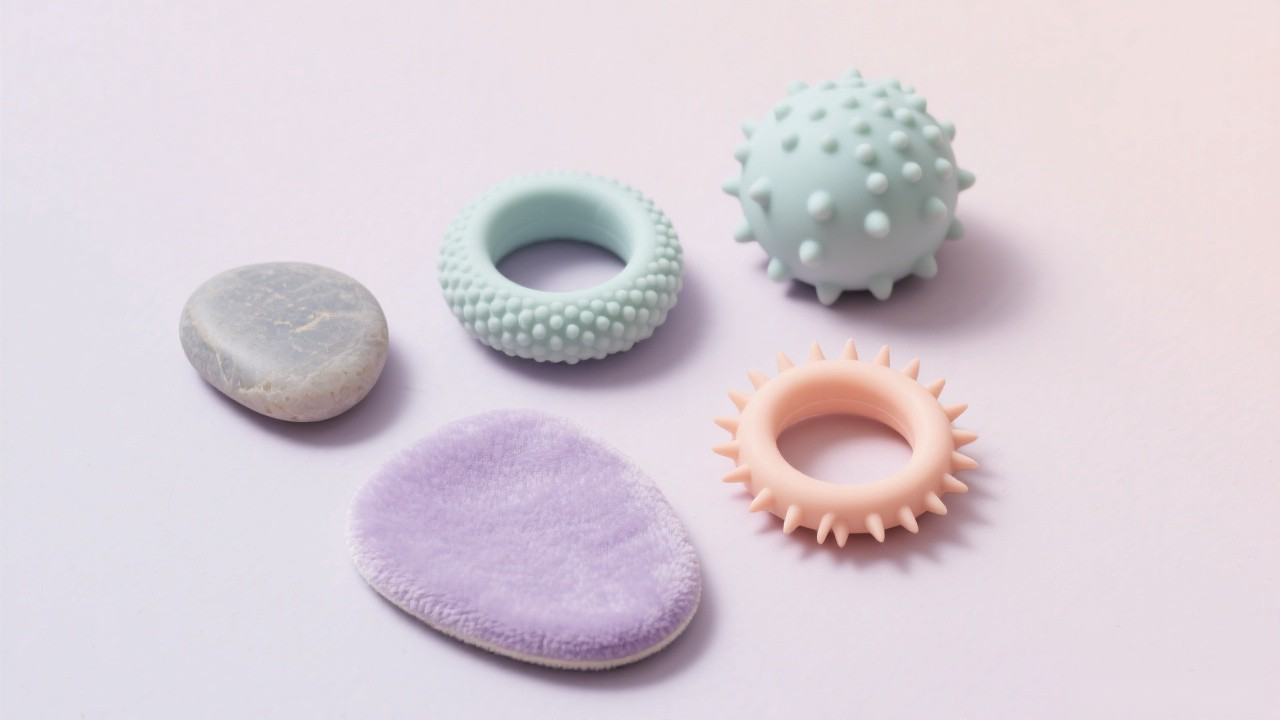
- Textured worry stones: Worry stones with raised patterns, grooves, and bumps provide a tactile experience that closely mimics the sensation of running fingers over skin irregularities. The act of tracing the textured surface with a thumb can satisfy the urge to pick while keeping hands occupied. Many people find that carrying a worry stone in their pocket makes it easy to access whenever the urge strikes.
- Silicone sensory discs: These small, flexible discs feature multiple textures on a single surface. They can be pressed, squeezed, and rubbed, providing varied tactile input. Their small size makes them discreet and portable, ideal for use in public settings.
Fidget Rings and Jewelry
Fidget rings are among the most popular and effective tools for skin picking because they are always accessible on the wearer's hand, making them an immediate replacement whenever the urge to pick arises.
- Spinner rings: These rings feature an outer band that spins freely around an inner band. The smooth, continuous spinning motion provides satisfying tactile and kinesthetic feedback. Spinner rings are particularly effective because they occupy the fingers in a way that directly competes with picking motions.
- Textured bands: Silicone or metal bands with raised textures, beads, or gears that can be rolled between the fingers. These provide a more intense tactile experience than smooth spinner rings and are ideal for people who crave stronger sensory input.
- Interlocking rings: Rings with movable components that can be shifted, rotated, or clicked into different positions. These provide both tactile and auditory feedback, which can enhance the replacement effect for people who respond well to sound-based stimulation.
Textured Fidget Pads and Mats
For use at home, at a desk, or during relaxation time, larger fidget pads and mats provide a more immersive sensory experience.
- Sensory fidget pads: These flat pads feature a variety of textures, buttons, zippers, and movable components. They provide multiple types of sensory input in a single device, making them versatile tools for habit replacement.
- Fidget keychains: Small fidget devices attached to a keychain ensure that a replacement tool is always within reach. Many feature textured surfaces, rolling balls, or click mechanisms that provide satisfying tactile feedback.
- Kinetic sand and therapy putty: These moldable materials provide intense tactile engagement that can satisfy strong picking urges. The act of kneading, shaping, and pulling the material occupies both hands and provides deep sensory feedback.
Developing a Personalized Habit Replacement Strategy
Step 1: Track Your Picking Patterns
Before selecting fidget toys, spend one to two weeks tracking your skin picking behavior. Keep a journal noting the time of day, your emotional state, your physical location, and what triggered the urge. This information will help you identify patterns and choose the most appropriate replacement tools. For example, if you tend to pick while watching television in the evening, keeping a fidget toy next to the couch would be a strategic intervention.
Step 2: Match the Sensory Experience
Choose fidget toys that closely match the specific sensory experience you seek when picking. If you tend to pick at scabs and bumps, textured toys that provide a similar rubbing sensation may be most effective. If you enjoy the resistance of pulling skin, stretchy or squishy toys that offer resistance when manipulated may be better suited. The closer the sensory match, the more effective the replacement will be.
Step 3: Create Accessibility
Place fidget toys in every location where you typically pick. Keep one on your nightstand, one in your living room, one at your desk, one in your bag, and one in your car. The easier it is to reach for a fidget toy, the more likely you are to use it instead of picking. The goal is to make the replacement behavior the path of least resistance.
Step 4: Practice Mindful Awareness
Mindfulness is a powerful tool for managing BFRBs. Practice noticing the urge to pick before it becomes overwhelming. When you feel the urge arising, pause, take a deep breath, and consciously choose to reach for your fidget toy instead. Over time, this mindful pause between urge and action creates the space needed to make a different choice.
Step 5: Combine with Professional Treatment
While fidget toys are valuable tools, they are most effective when combined with professional treatment. Cognitive Behavioral Therapy (CBT) can help address the underlying thoughts and emotions that drive picking behavior. Habit Reversal Training (HRT) provides structured techniques for building competing responses. Acceptance and Commitment Therapy (ACT) helps individuals develop a different relationship with their urges, learning to tolerate discomfort without acting on it. A licensed mental health professional who specializes in BFRBs can create a comprehensive treatment plan tailored to your specific needs.
Gradual Habit Replacement: A Realistic Approach
Setting Realistic Expectations
One of the most important aspects of habit replacement is setting realistic expectations. Complete cessation of skin picking is a worthy long-term goal, but expecting immediate results can lead to frustration and relapse. Instead, focus on incremental progress. If you currently pick for two hours per day, reducing that to one hour is a significant achievement. Celebrating small victories along the way helps maintain motivation and reinforces the new behavior.
The Stages of Change
Habit replacement typically follows a predictable progression through several stages. In the awareness stage, you learn to recognize your picking patterns and triggers. In the preparation stage, you acquire fidget toys and develop your replacement strategy. In the action stage, you actively practice using fidget toys instead of picking. In the maintenance stage, the new behavior becomes more automatic, requiring less conscious effort. Understanding this progression helps normalize the challenges you may face at each stage.
Handling Setbacks
Setbacks are a normal and expected part of the habit replacement process. If you find yourself picking despite your best efforts, avoid self-criticism. Instead, treat the setback as a learning opportunity. Ask yourself what triggered the relapse, whether your fidget toys were accessible, and whether you need to adjust your strategy. Each setback provides valuable information that can strengthen your approach moving forward.
Building a Support System
Recovering from a BFRB is easier with support. Consider joining a support group for people with skin picking disorder, either in person or online. The TLC Foundation for Body-Focused Repetitive Behaviors is a leading organization that provides resources, support groups, and treatment referrals. Sharing your experience with others who understand the challenges can reduce feelings of isolation and provide practical tips and encouragement.
Additional Strategies for Managing Skin Picking
Environmental Modifications
Modifying your environment can reduce the frequency and intensity of picking episodes. Consider covering mirrors in areas where you tend to pick, using dim lighting in bathrooms, keeping fingernails trimmed short, and wearing gloves during high-risk times. These environmental barriers create additional obstacles between the urge and the behavior, giving you more time to reach for your fidget toy.
Skin Care as Prevention
Maintaining healthy skin can reduce the tactile triggers that lead to picking. Use a gentle moisturizer regularly to prevent dryness and flaking, which are common picking triggers. Treat any existing skin conditions such as eczema or acne with the guidance of a dermatologist. Healthy, smooth skin provides fewer irregularities to fixate on.
Stress Management Techniques
Since stress is a primary trigger for most people with skin picking disorder, incorporating stress management techniques into your daily routine can significantly reduce picking frequency. Deep breathing exercises, progressive muscle relaxation, regular physical exercise, journaling, and meditation are all evidence-based stress reduction strategies that complement the use of fidget toys.
Conclusion
Fidget toys offer a practical, accessible, and effective tool for managing skin picking disorder. By providing alternative sensory input that satisfies the same urges driving the picking behavior, they serve as a bridge between the compulsion to pick and the development of healthier coping mechanisms. When combined with professional treatment, environmental modifications, and stress management techniques, fidget toys can play a central role in a comprehensive habit replacement strategy. Remember that recovery is a journey, not a destination, and every time you choose a fidget toy over picking, you are strengthening new neural pathways that move you closer to your goals.
Frequently Asked Questions
Can fidget toys really help with skin picking disorder?
Yes, fidget toys can be highly effective as part of a comprehensive habit replacement strategy for skin picking disorder. They work by providing alternative tactile and sensory input that satisfies the urge to pick without causing harm to the skin. Research on BFRBs shows that sensory substitution is one of the most effective non-pharmacological approaches, especially when combined with professional therapy such as CBT or HRT.
What type of fidget toy is best for skin picking?
The best fidget toys for skin picking are those that closely match the sensory experience of picking. Tactile-intensive options like textured stones, NeeDoh squish toys, fidget rings with textured surfaces, and silicone picks provide similar finger movements and tactile feedback. The key is finding a toy that feels satisfying to your specific sensory preferences.
Is skin picking disorder a mental health condition?
Yes, skin picking disorder, clinically known as excoriation disorder or dermatillomania, is classified as a Body-Focused Repetitive Behavior (BFRB) in the DSM-5. It is a recognized mental health condition that affects an estimated 2 to 4 percent of the population. It often co-occurs with anxiety disorders, OCD, and other BFRBs like hair pulling.
Should I use fidget toys instead of therapy for skin picking?
Fidget toys should be used as a complement to professional treatment, not a replacement. The most effective approach combines habit replacement tools like fidget toys with evidence-based therapies such as Habit Reversal Training (HRT), Cognitive Behavioral Therapy (CBT), and Acceptance and Commitment Therapy (ACT). A mental health professional can create a personalized treatment plan that addresses the underlying triggers and patterns of the behavior.
How long does it take for fidget toys to help reduce skin picking?
The timeline varies significantly between individuals. Some people notice a reduction in skin picking within the first few weeks of consistently using fidget toys as a replacement. For others, it may take several months of practice combined with therapy to see significant improvement. Consistency is key, and the habit replacement process typically follows a gradual curve rather than an overnight transformation.