Discrete Fidget Toys for Adults: Professional Stress Relief 2026
Dr. Sarah Mitchell
Author
The Growing Need for Discreet Stress Relief in Professional Life
Modern professional life demands sustained attention, emotional composure, and constant availability. Whether you are navigating a high-pressure client presentation, sitting through a three-hour strategy meeting, or managing the relentless stream of notifications that defines the contemporary workplace, stress is an unavoidable companion. For many adults, the need to self-regulate during professional activities is not merely a preference but a necessity for maintaining performance and well-being.
Discrete fidget toys have emerged as a practical solution for professionals who need sensory regulation without compromising their professional image. Unlike children's fidget spinners or brightly colored sensory tools, discrete fidgets are designed to blend seamlessly into professional environments. They resemble jewelry, office accessories, or personal items, allowing adults to access calming sensory input without attracting unwanted attention or judgment.
This guide explores the full landscape of discreet fidget options available to adults in 2026, with specific recommendations for different professional scenarios, practical strategies for introducing fidget tools into the workplace, and evidence-based guidance for choosing the right tool for your individual needs.
Understanding the Adult Need for Fidget Tools
Why Adults Fidget
Fidgeting is a natural, neurological response to stress, boredom, and cognitive demand. Research in cognitive psychology has demonstrated that small, repetitive movements occupy the brain's motor circuits, freeing cognitive resources for focused attention on primary tasks. In other words, fidgeting is not a sign of distraction but rather a mechanism that supports concentration.
Functional MRI studies have shown that when individuals engage in purposeful fidgeting during attention-demanding tasks, activity in the prefrontal cortex, the brain region responsible for executive function, actually increases. This finding contradicts the common assumption that fidgeting is a distraction and instead positions it as a cognitive support strategy.
For adults in high-stress professions, fidgeting serves an additional purpose: anxiety management. Repetitive sensory input activates the parasympathetic nervous system, counteracting the fight-or-flight response triggered by stressful situations. This physiological mechanism explains why many professionals instinctively click pens, bounce their legs, or doodle during meetings without consciously deciding to do so.
The Stigma Challenge
Despite growing awareness of mental health and neurodiversity in the workplace, a persistent stigma surrounds the use of fidget tools by adults. Many professionals worry that using a fidget toy will be perceived as childish, unprofessional, or indicative of an inability to cope with workplace demands. This concern is particularly acute for individuals in client-facing roles, leadership positions, or conservative corporate cultures.
Addressing this stigma requires both individual strategies and broader cultural shifts. On an individual level, choosing truly discreet tools that do not draw attention is the most effective approach. On a cultural level, the growing body of research supporting fidget-based interventions and the increasing openness about workplace mental health are gradually normalizing the use of sensory regulation tools among adults.
Neurodiversity and Professional Fidget Use
Adults with ADHD, autism spectrum disorder, anxiety disorders, and sensory processing differences often have heightened needs for sensory regulation. For these individuals, fidget tools are not a luxury but an essential accommodation that enables them to perform at their professional best. The Americans with Disabilities Act and similar legislation in other countries recognize sensory tools as legitimate workplace accommodations when prescribed by a healthcare provider.
Even for neurotypical adults, the demands of modern work, including prolonged screen time, back-to-back virtual meetings, and constant connectivity, create sensory processing challenges that fidget tools can effectively address. The distinction between therapeutic necessity and general wellness support is increasingly blurred, benefiting all professionals regardless of neurodiversity status.
Categories of Discrete Fidget Toys for Adults
Wearable Fidget Jewelry
Wearable fidget tools represent the gold standard for discretion because they are designed to be worn openly as accessories. Their dual function as both jewelry and sensory tools makes them virtually undetectable as fidgets in professional settings.
#### Spinner Rings
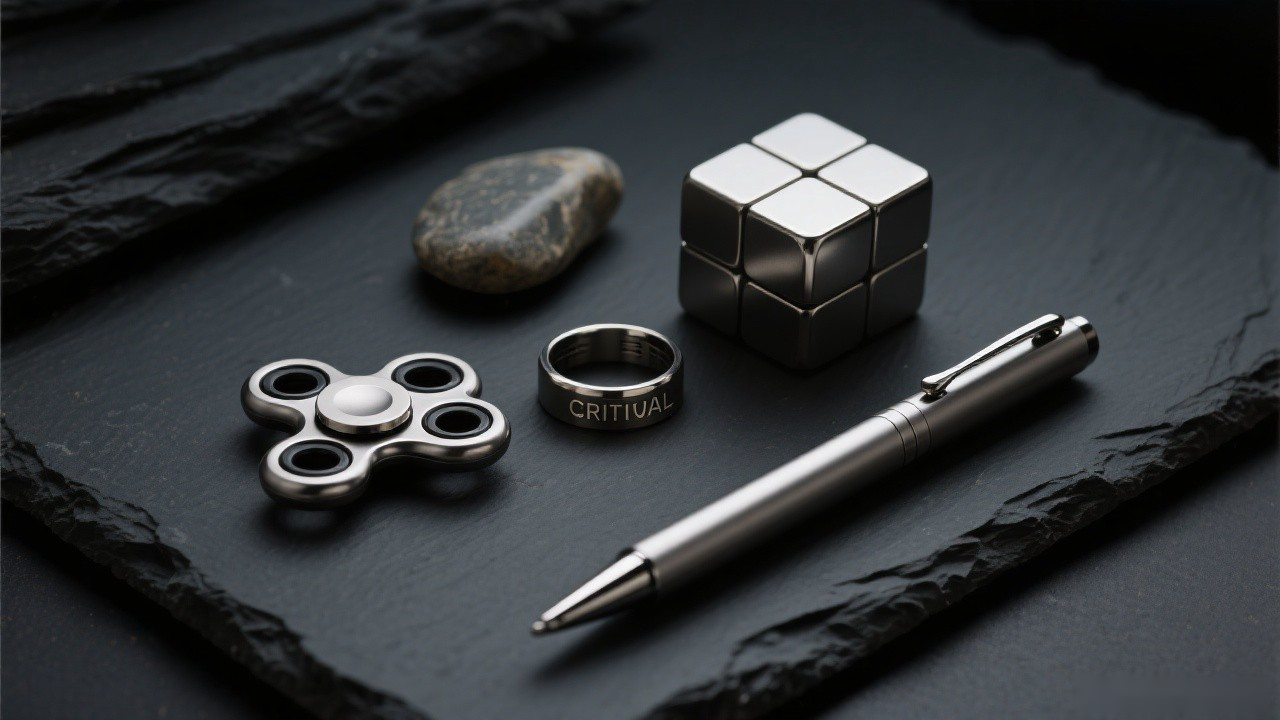
Spinner rings, also known as anxiety rings or meditation rings, feature an outer band that rotates freely around a stationary inner band. The smooth, silent spinning motion provides rhythmic kinesthetic input that is deeply calming. Spinner rings are available in a wide range of metals and finishes, from polished stainless steel to brushed titanium, allowing professionals to choose options that match their personal style and workplace dress code.
The therapeutic mechanism of spinner rings combines tactile engagement with repetitive motion. The spinning action engages fine motor control while providing predictable, rhythmic sensory feedback. This combination is particularly effective for managing acute anxiety because the repetitive motion serves as an anchor for attention, preventing the spiraling thought patterns that characterize anxiety episodes.
For maximum discretion, choose spinner rings with a narrow band width and a smooth, quiet spin mechanism. Wider bands with textured surfaces provide more intense sensory input but may be more noticeable during use. I recommend having two options: a subtle ring for high-visibility situations and a more textured ring for private work time.
#### Fidget Bracelets and Bangles
Fidget bracelets incorporate movable elements such as sliding beads, interlocking links, or textured surfaces that can be manipulated discreetly. Leather bracelets with rolling magnetic clasps, metal bangles with spinning segments, and beaded bracelets with varied textures all provide portable sensory input that looks like ordinary jewelry.
Magnetic fidget bracelets are particularly popular among professionals because the satisfying snap of magnetic elements provides both tactile and auditory feedback in a very subtle way. The magnetic resistance also offers proprioceptive input through the gentle pulling and pushing of components.
#### Textured Necklaces and Pendants
Pendants with textured surfaces, movable parts, or smooth stones set in metal provide tactile input that can be accessed by touching or rubbing the pendant. These are especially useful for professionals who prefer not to wear rings or bracelets. A small textured pendant on a simple chain looks like a standard piece of jewelry while offering a convenient sensory outlet.
Pocket-Sized Fidget Tools
For professionals who prefer not to wear jewelry or who want additional options, pocket-sized fidget tools offer excellent discretion. These tools are small enough to be carried in a pocket, bag, or desk drawer and used with one hand below desk level.
#### NeeDoh Squishables
NeeDoh squishable toys are among the most versatile discreet fidget options available. Their compact size allows them to be held in one hand or kept in a pocket, and their silent operation ensures they will not create noise distractions in quiet meeting environments. The satisfying squish and slow return provide calming proprioceptive and tactile input that helps regulate the nervous system during stressful professional interactions.
The NeeDoh Nice Cube is particularly well-suited for professional use due to its compact, geometric shape that resembles a stress ball. The NeeDoh Dream Drop offers a softer, more fluid sensory experience that is ideal for prolonged use during long meetings or conference calls. Both options are available in muted, professional colorways that avoid the bright, playful aesthetics associated with children's toys.
#### Worry Stones and Sensory Stones
Worry stones are smooth, polished stones with a thumb-sized indentation on one surface. The practice of rubbing the thumb across this indentation dates back centuries and is rooted in mindfulness and grounding traditions. Modern worry stones are available in natural gemstone, polished metal, and ceramic varieties, offering different textures and weights to suit individual preferences.
Sensory stones with varied textures, such as etched patterns or raised dots, provide more intense tactile discrimination input. These stones can be kept on a desk as paperweights, in a pocket, or in a bag, making them accessible throughout the workday.
#### Magnetic Desk Toys
Magnetic desk toys, such as magnetic spheres, magnetic building sticks, and magnetic sculpture kits, provide engaging tactile and proprioceptive input while doubling as desktop decor. These tools are best used during individual work time or informal settings rather than client-facing meetings, as the building and rearranging process is more visually apparent.
For meetings, a simpler option is a pair of magnetic hemispheres that can be quietly manipulated in one hand. The satisfying snap when the magnets connect provides proprioceptive feedback, and the small size makes them easy to conceal.
Office-Integrated Fidget Tools
Some fidget tools are designed to look like standard office supplies, making them virtually invisible in any professional setting.
#### Textured Writing Instruments
Pens and pencils with textured grips, clickable mechanisms, or spinning components serve dual purposes as writing tools and fidget devices. A pen with a textured rubber grip provides tactile input during writing, while a pen with a satisfying click mechanism offers auditory and kinesthetic feedback. Some premium pens feature spinning barrel elements that can be rotated discreetly during meetings.
#### Desk Pads and Mouse Pads with Sensory Features
Desk pads with textured surfaces, raised patterns, or built-in sensory elements provide tactile input during routine computer work. These large-format tools are unobtrusive and can be used continuously without drawing attention. Some desk pads include raised borders or textured zones specifically designed for finger tracing and rubbing.
#### Chair-Based Fidget Tools
Cushions with subtle texture, seat wedges that allow micro-movements, and footrests with textured surfaces provide sensory input through the lower body. These tools are completely invisible to others and can be used continuously throughout the workday. Wobble cushions, which allow subtle rocking movements while seated, are particularly effective for professionals who need vestibular input to maintain focus.
Professional Scenario Guide
Client Presentations and Pitches
Client presentations are among the highest-stakes professional scenarios, and the anxiety they generate can impair performance. For these situations, wearable fidget tools are the best choice because they do not require you to hold or retrieve anything during the presentation.
A spinner ring on your index finger or thumb provides continuous sensory input while your hands are gesturing or resting on the podium. The spinning motion is subtle enough that audience members are unlikely to notice, even from a close distance. Practice using your ring during rehearsal presentations so the motion becomes automatic and does not require conscious attention during the actual event.
If you prefer not to wear jewelry, a small NeeDoh squishable held in your non-dominant hand below the podium or table is an effective alternative. The gentle pressure of squeezing provides grounding proprioceptive input that helps maintain composure during challenging questions or unexpected interruptions.
Team Meetings and Brainstorming Sessions
Team meetings typically have a lower formality level than client presentations, allowing for slightly more visible fidget tool use. However, maintaining professionalism is still important, particularly in meetings with senior leadership or cross-functional colleagues.
For team meetings, I recommend pocket-sized tools that can be used below desk level, such as worry stones, small NeeDoh products, or magnetic hemispheres. These tools provide sufficient sensory input for regulation while remaining invisible to other meeting participants. If your workplace culture is more relaxed, textured pens or small desk toys may also be appropriate.
During brainstorming sessions, where creativity and free-flowing ideas are encouraged, slightly more engaging fidget tools can enhance creative thinking. Research on embodied cognition suggests that physical manipulation of objects can facilitate creative problem-solving by activating different neural pathways.
One-on-One Meetings and Performance Reviews
One-on-one meetings, particularly performance reviews or difficult conversations with direct reports, require focused attention and emotional regulation. In these intimate settings, even subtle fidgeting can be noticeable to the other participant.
Wearable tools are again the best choice for one-on-one meetings. A spinner ring or textured bracelet provides sensory input without requiring any visible hand movements. If you anticipate a particularly challenging conversation, arrive a few minutes early and use a pocket fidget tool to regulate your nervous system before the meeting begins.
Video Calls and Remote Work
Remote work has created unique opportunities for fidget tool use. During video calls, only your upper body is visible to other participants, which means you can use a wider range of fidget tools below the camera frame. NeeDoh squishables, worry stones, and even small therapy putty can be used in your lap or on your desk without being detected.
The challenge with video calls is that the camera creates a sense of being watched, which can increase self-consciousness about fidgeting. Position your camera at eye level and ensure your fidget tool is below the frame. Practice using your tool during low-stakes calls before relying on it during important meetings.
Open Office Environments
Open office layouts present unique challenges for fidget tool users because colleagues can easily observe your behavior. In these environments, discretion is paramount. Wearable tools and pocket-sized options that can be used without visible hand movements are the most practical choices.
Noise sensitivity is another consideration in open offices. Avoid fidget tools that produce clicking, tapping, or other sounds that could disturb nearby colleagues. Silent options like NeeDoh squishables, smooth worry stones, and spinner rings with quiet mechanisms are ideal for shared workspaces.
Overcoming Social Stigma and Workplace Resistance
Reframing the Narrative
One of the most effective strategies for addressing workplace stigma is reframing how you describe your fidget tool use. Instead of calling it a fidget toy, use language that emphasizes its function as a stress management or focus tool. Phrases like "I use a grounding ring for stress management" or "This sensory tool helps me stay focused during long meetings" position the tool as a professional accessory rather than a plaything.
Drawing parallels to widely accepted stress management tools can also help. Stress balls, for example, have been common in offices for decades and are rarely questioned. Positioning your fidget tool as a modern, more effective version of the traditional stress ball makes it more relatable and acceptable to colleagues.
Gradual Introduction
If you are concerned about how your fidget tool use will be received, introduce it gradually. Start by using a very subtle tool, such as a plain spinner ring, in low-stakes situations. As colleagues become accustomed to seeing it, you can gradually expand your use to more challenging scenarios. This incremental approach normalizes the tool without creating a sudden shift that might attract attention.
Educating Your Workplace
For professionals who feel comfortable doing so, educating colleagues about the benefits of fidget tools can reduce stigma for everyone. Sharing research on how fidgeting supports attention and stress management, explaining the neuroscience behind sensory regulation, and highlighting that many successful professionals use these tools can shift workplace culture toward greater acceptance.
If you have a formal diagnosis such as ADHD or an anxiety disorder, you may choose to disclose this to your employer and request fidget tools as a workplace accommodation. Human resources departments are increasingly familiar with sensory accommodation requests and can facilitate a supportive process.
Product Recommendations by Professional Context
Conservative Corporate Environments
For law firms, financial institutions, and other conservative workplaces, choose fidget tools that are indistinguishable from standard professional accessories. A polished metal spinner ring, a smooth gemstone worry stone, or a premium textured pen provides effective sensory regulation without raising eyebrows. Stick to neutral colors such as silver, gold, black, and navy.
Creative and Tech Industries
Creative agencies, tech companies, and startups typically have more relaxed cultures where fidget tool use is widely accepted. In these environments, you can opt for more visually interesting options such as colorful NeeDoh products, magnetic desk toys, and multi-textured sensory tools. Desk-friendly options like kinetic sand bowls or magnetic sculpture kits can serve as both sensory tools and conversation starters.
Healthcare and Education Settings
Healthcare professionals and educators often work in high-stress environments where sensory regulation is essential but visible fidgeting may be inappropriate. Wearable tools that can be used during patient interactions or classroom instruction are ideal. Spinner rings, textured lanyard clips, and pocket-sized NeeDoh products provide regulation without compromising professionalism.
Remote and Hybrid Workers
Remote workers have the most flexibility in their fidget tool choices since they are not observed by colleagues during most of their workday. This freedom allows for a wider range of tools, including those that are more visually engaging or produce moderate noise. I recommend creating a fidget toolkit with several options for different types of work tasks: a wearable tool for video calls, a desk toy for focused work, and a pocket tool for transition periods.
Building Your Personal Fidget Strategy
Assessing Your Sensory Preferences
Effective fidget tool selection begins with understanding your personal sensory preferences. Consider the following questions. Do you prefer movement-based input like spinning or sliding? Do you respond better to tactile input like texture and pressure? Do you find deep pressure calming or do you prefer light touch? Do you benefit from auditory feedback like clicking or snapping, or do you need silent tools?
Your answers to these questions will guide your product selection. Most people have a primary sensory preference and one or two secondary preferences. Building a small collection of tools that address your unique sensory profile ensures you have appropriate options for any situation.
Creating a Fidget Toolkit
A well-rounded fidget toolkit includes tools for different scenarios and stress levels. I recommend including at least one wearable option for high-visibility situations, one pocket-sized option for below-desk use, and one desk-based option for private work time. Having multiple tools also prevents sensory habituation, which can reduce a tool's effectiveness over time with constant use.
Rotate your tools periodically to maintain their sensory novelty. A tool that has become less effective after weeks of daily use will often regain its regulating properties after a brief break. Keeping three to five tools in rotation ensures you always have a fresh, effective option available.
Combining Fidget Tools with Other Regulation Strategies
Fidget tools are most effective when combined with other stress management strategies. Deep breathing exercises, progressive muscle relaxation, and brief movement breaks all complement the sensory input provided by fidget tools. Developing a comprehensive self-regulation plan that includes multiple strategies ensures you have options for any situation, regardless of the stress level or environmental constraints.
Mindfulness practices pair particularly well with fidget tool use. Using a spinner ring or worry stone as a mindfulness anchor, focusing your attention on the physical sensation of the tool, can deepen the calming effect and interrupt anxiety-driven thought patterns.
Conclusion
Discrete fidget toys represent a practical, evidence-based solution for adults who need to manage stress and maintain focus in professional environments. The range of available options in 2026, from elegant spinner rings to pocket-sized NeeDoh squishables, ensures that every professional can find tools that meet their sensory needs without compromising their professional image.
The key to successful fidget tool use is thoughtful selection based on your individual sensory profile, strategic deployment appropriate to each professional scenario, and confidence in the knowledge that sensory regulation is a legitimate and valuable self-management strategy. As workplace culture continues to evolve toward greater acceptance of mental health and neurodiversity, the use of discreet fidget tools will only become more normalized and widespread.
Investing in a small collection of high-quality, discreet fidget tools is an investment in your professional performance and personal well-being. The ability to self-regulate during high-stakes meetings, maintain focus during long work sessions, and manage anxiety during challenging interactions is a genuine competitive advantage in any professional field.
Frequently Asked Questions
What are the most discreet fidget toys for office meetings?
The most discreet options for office meetings include spinner rings worn on your finger, small textured stones held in a pocket, magnetic desk toys that look like paperweights, and NeeDoh squishables kept below desk level. These tools provide sensory regulation without drawing attention from colleagues or supervisors.
Are fidget toys appropriate for professional environments?
Yes, when chosen carefully. Discreet fidget toys that resemble jewelry, office supplies, or personal accessories are widely accepted in professional settings. Many professionals use these tools to manage stress and improve focus during demanding work tasks. The key is selecting tools that do not produce noise or create visual distractions for others.
How can I use a fidget toy during a client presentation without being noticed?
Wearable fidget tools like spinner rings or anxiety rings are ideal for presentations because they are worn openly and used with minimal hand movement. Alternatively, a small NeeDoh squishable can be held in one hand below the podium or desk. Practice using your chosen tool beforehand so the movement becomes automatic and does not interfere with your presentation.
How do I address colleagues who think fidget toys are unprofessional?
Explain that fidget tools are evidence-based stress management aids supported by occupational therapy research. Frame them similarly to stress balls, which are widely accepted in offices. Highlight that your tool helps you maintain focus and composure, which benefits your work quality. If resistance persists, opt for more subtle options like rings or pocket stones that are virtually invisible during use.
What fidget toys work best for anxiety during high-stakes meetings?
For high-stakes meetings, grounding tools are most effective. Spinner rings provide rhythmic, repetitive motion that anchors attention. Textured worry stones offer tactile grounding through thumb-rubbing motions. NeeDoh squishables deliver calming proprioceptive input through gentle squeezing. The best choice depends on whether you respond better to movement, texture, or pressure-based sensory input.