Anxiety Ring Fidget Jewelry: Complete Guide to Spinner Rings 2026
Maya Chen
Author
I started wearing an anxiety ring on a Tuesday afternoon in October 2023, and I have not taken it off since. That might sound dramatic, but if you have ever sat through a two-hour work presentation while your brain screamed at you, you understand the appeal of having something small and quiet to do with your hands.
Before I bought my first spinner ring, I was the person who clicked pens during meetings. I shredded napkins at restaurants. I picked at the skin around my nails until they bled. I needed something that did not make me look like I was losing it in front of my coworkers.
That first ring was a simple brushed stainless steel spinner from a small shop on Etsy. It cost me twenty-two dollars. It was not pretty. It was not a conversation starter. But it changed the way I handled my anxiety in public, and that is why I am writing this guide.
What Exactly Is an Anxiety Ring?
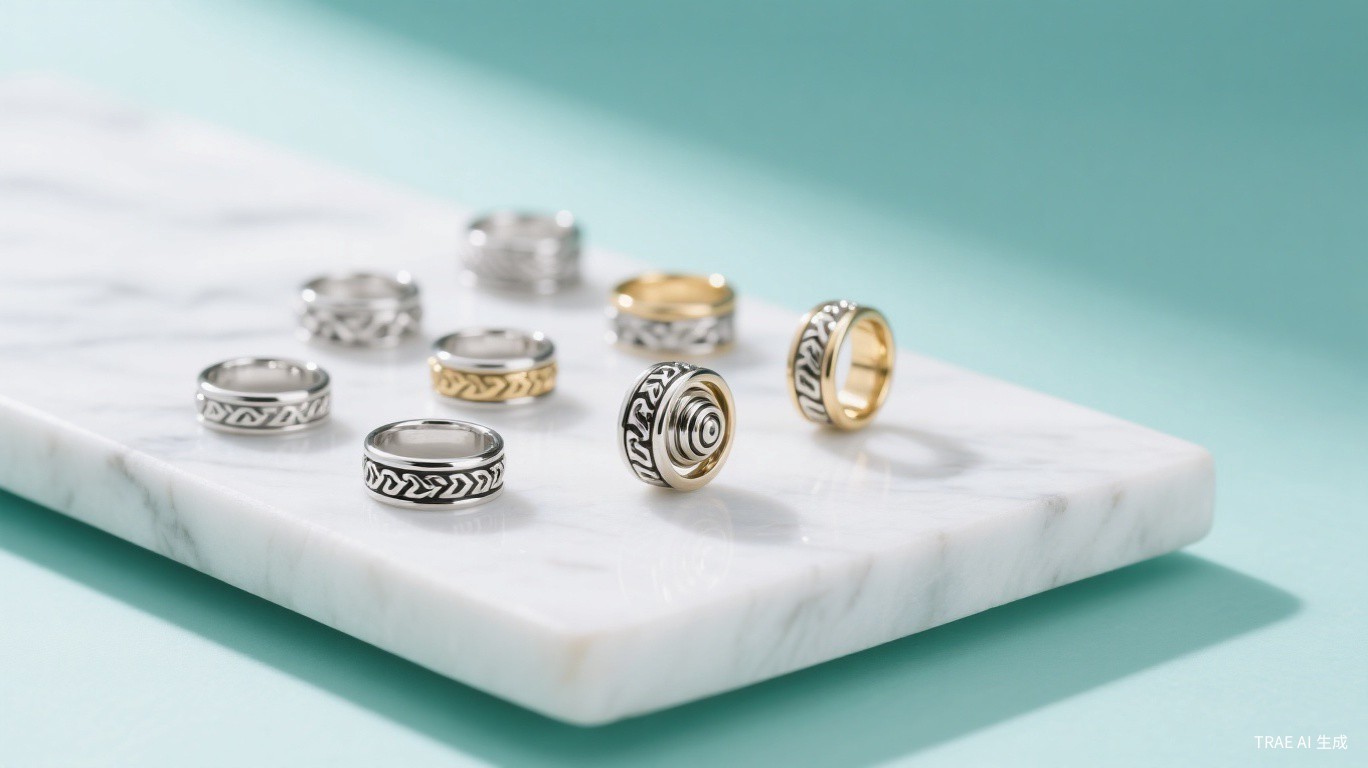
An anxiety ring is any piece of jewelry designed with a fidget-friendly mechanism built into it. The most common type is the spinner ring, which features an outer band that rotates freely around an inner band. You spin it with your thumb while it sits on your finger. Simple as that.
But spinner rings are not the only option. The fidget jewelry category has grown a lot over the past few years, and now you can find rings with clicking mechanisms, textured surfaces you can rub, magnetic components that slide, and even rings with tiny moving beads embedded in the band.
The whole point is to give your hands something repetitive and satisfying to do without anyone around you noticing. Think of it as a fidget toy disguised as grown-up jewelry.
Why Tactile Stimulation Helps with Anxiety
Here is the science without getting too textbook about it. When you engage in repetitive tactile stimulation like spinning a ring, it activates your parasympathetic nervous system. That is the system responsible for calming you down. It is the opposite of the fight-or-flight response.
The rhythmic motion also gives your brain a low-stakes task to focus on, which can interrupt the cycle of anxious thoughts. It is not magic. It does not work for everyone. But for people who fidget when they are anxious, having a physical outlet that is both discreet and socially acceptable is genuinely helpful.
I notice the difference most during phone calls. When I am on a stressful call, I catch myself spinning the ring faster. Once I realize I am doing it, I slow down and focus on the sensation. That moment of awareness is usually enough to pull me out of whatever spiral I was heading into.
Types of Anxiety Rings
After three years of collecting and testing, I have owned or tried at least fifteen different anxiety rings. Here is what I have learned about each type.
Spinner Rings
The classic. An outer band rotates around an inner band. Some spin freely for a long time with one flick, others have more resistance and require you to keep pushing them with your thumb. I prefer a moderate spin time of about three to four seconds. Rings that spin too freely feel cheap to me, and rings that are too stiff defeat the purpose.
Best for: General anxiety, meetings, phone calls, studying.
Clicking Rings
These have a small mechanism inside that produces a subtle click when you press on part of the band. Think of it like a tiny button you can press with your thumb. They are more tactile than spinner rings and give a more satisfying physical feedback.
The downside is that they can produce a faint clicking sound. In a quiet room, someone sitting next to you might hear it. I use mine at home or in louder environments like coffee shops.
Best for: People who need stronger physical feedback, home use, ADHD-related fidgeting.
Textured Rings
These are the simplest option. They are just rings with raised patterns, grooves, or different textures on the surface. You run your thumb or another finger over the texture. There is no moving part. They look the most like normal jewelry because they are normal jewelry with a sensory bonus.
I wear a textured wave ring on my right hand as a secondary fidget. It is less actively engaging than a spinner, but it is perfect for subtle moments when I just need a small sensory anchor.
Best for: Mild anxiety, people who want something invisible, sensory grounding.
Magnetic Rings
These have small neodymium magnets embedded in the band that allow segments to slide and click together. They are more playful than other types and feel almost like a puzzle. I find them more engaging but also more distracting, so I tend to wear them at home rather than in professional settings.
Best for: Strong fidget needs, home use, people who like puzzle-like engagement.
Beaded Spinner Rings
A hybrid design where small beads sit inside a channel on the ring and roll around as you move your finger. The beads produce a quiet clicking sensation as they move. These are surprisingly satisfying and offer a different feel from standard spinner rings.
Best for: People who want both tactile and auditory feedback, meditation and mindfulness practice.
Choosing the Right Material
Material matters more than you think when it comes to anxiety rings. You are going to be touching this thing constantly, so it needs to feel right against your skin.
Sterling Silver
My personal favorite. It has a cool, smooth feel that is pleasant to touch. It develops a natural patina over time, which some people love and others hate. Sterling silver is hypoallergenic for most people, though a small percentage of the population reacts to the copper content.
Pros: Beautiful, hypoallergenic, develops character over time. Cons: Tarnishes without regular cleaning, softer metal that can scratch, higher price point.
Stainless Steel
The workhorse of anxiety rings. It is extremely durable, does not tarnish, and costs less than silver. The weight feels substantial, which I like. Some people find stainless steel rings feel cold when you first put them on, but they warm up to body temperature quickly.
Pros: Very durable, affordable, low maintenance, hypoallergenic. Cons: Heavier than some alternatives, can look industrial, limited design options.
Titanium
Lightweight and incredibly strong. If you are rough on your jewelry or work with your hands, titanium is hard to beat. It is also hypoallergenic and will not corrode. The downside is that titanium rings are harder to resize and tend to cost more than stainless steel.
Pros: Ultra-lightweight, very strong, hypoallergenic. Cons: More expensive, difficult to resize, fewer design options.
Silicone
The best choice for active lifestyles. Silicone rings are flexible, comfortable, and completely waterproof. They are also the safest option if you work with machinery or in environments where a metal ring could get caught on something.
They do not have the same premium feel as metal rings, and the spinning mechanisms on silicone rings tend to be less smooth. But if you need something you can wear to the gym, in the shower, or while doing manual work, silicone is the way to go.
Pros: Flexible, waterproof, safe for active use, very affordable. Cons: Less premium feel, fewer fidget mechanisms available, wears out faster.
Where and When to Wear Your Anxiety Ring
This is where anxiety rings really shine compared to other fidget toys. You can wear them literally anywhere and nobody gives you a second look.
At Work
This is the number one reason I bought my first ring. During meetings, presentations, and stressful phone calls, I can spin my ring under the table or while resting my hand on my desk. Nobody has ever asked me about it. Most people think it is just a regular piece of jewelry.
If you work in a conservative office, stick with a simple silver or stainless steel spinner. Avoid anything too chunky or mechanical-looking.
While Studying
College students and anyone doing focused mental work benefit from having a fidget ring. The low-level physical activity can actually help maintain focus during long study sessions. I used mine throughout grad school and noticed I was less likely to reach for my phone when my hands were occupied.
In Social Situations
Social anxiety is where fidget jewelry earns its price tag. At parties, dinners, or any gathering where you feel on edge, having something to do with your hands gives you an anchor. I spin my ring under the table at restaurants and it helps me stay present in conversations instead of mentally rehearsing my exit strategy.
During Therapy
My therapist was actually the one who suggested I try a fidget ring. She recommended it as a grounding tool for moments when my anxiety starts to escalate. The physical sensation of the ring spinning gives me something real to focus on, which helps pull me out of my head.
Care and Maintenance Tips
If you are wearing your ring every day, it needs some basic care.
- Clean it weekly. For metal rings, warm water with a drop of dish soap and a soft cloth works fine. For sterling silver, use a silver polishing cloth once a month to keep the shine.
- Remove it before showering if it is sterling silver. Water alone will not damage it, but the soap residue can accelerate tarnishing.
- Store it on a ring holder or small dish when you take it off. Rings that live on nightstands have a tendency to roll off and disappear into the void behind furniture.
- Check the spinner mechanism every few months. If the spinning gets stiff, a tiny drop of mineral oil on the bearing usually fixes it.
- Avoid wearing it while using harsh chemicals. Cleaning products, chlorine, and some lotions can damage both the metal and the mechanism.
How to Find the Right Size
This is important because you want the ring to be comfortable enough to wear all day but snug enough that the spinning mechanism works properly. A ring that is too loose will not spin well because it will slide around your finger instead of staying in place while the outer band rotates.
- Visit a jewelry store and get your finger measured. Most stores do this for free.
- Buy a cheap ring sizer online for a couple of dollars if you want to measure at home.
- Consider that your fingers swell in heat and shrink in cold. Measure at room temperature.
- If you are between sizes, go with the smaller one for a fidget ring. You need the base to stay put.
Where to Buy Quality Anxiety Rings
You have a lot of options, and quality varies wildly.
Etsy is my go-to recommendation for first-time buyers. You can find handmade spinner rings from independent sellers at reasonable prices. Read reviews carefully and look for sellers with detailed product photos and clear sizing information. Expect to spend twenty to sixty dollars for a good quality ring.
Amazon has a huge selection but the quality is inconsistent. Stick to listings with thousands of reviews and avoid anything suspiciously cheap. A five-dollar spinner ring is probably going to fall apart in a week.
Specialty fidget jewelry brands like CONQUERing, Little Omo, and Fidgetland have emerged in recent years. They tend to charge more but offer better mechanisms and more intentional designs. If you want something specifically engineered for fidgeting rather than a jewelry piece that happens to spin, these brands are worth checking out.
Local jewelers can sometimes create custom spinner rings. This is the most expensive option but you get a perfectly sized ring made from exactly the material you want. I had a custom sterling silver spinner made for about one hundred twenty dollars and it is my favorite piece by far.
My Top Picks After Three Years of Testing
If you want a quick recommendation, here is what I suggest based on your situation.
- First anxiety ring: A stainless steel spinner from a well-reviewed Etsy seller. Thirty to forty dollars. Get the experience before you invest more.
- For work: A slim sterling silver spinner that looks like regular jewelry. Forty to seventy dollars.
- For active lifestyles: A silicone fidget ring. Ten to twenty dollars. Buy two because they eventually stretch out.
- For strong fidget needs: A clicking or magnetic ring from a specialty brand. Fifty to eighty dollars.
- Treat yourself: A custom spinner from a local jeweler in your preferred metal. One hundred to two hundred dollars.
The Honest Truth About Anxiety Rings
I want to be real with you. An anxiety ring is not going to fix your anxiety. It is not therapy. It is not medication. It is a tool. A small, portable, socially acceptable tool that gives your hands something to do when your brain is being unkind to you.
For me, it works best as part of a bigger toolkit. I still see my therapist. I still practice breathing exercises. But when I am in a meeting and my heart starts racing, that little ring gives me something to hold onto while I work through it. And honestly, that is worth twenty-two dollars and a trip to Etsy.
If you have been on the fence about trying fidget jewelry, this is your sign. Start cheap, wear it for a month, and see if it makes a difference. If it does, you can always upgrade later. If it does not, you are out less than the cost of a decent lunch.
Frequently Asked Questions
Do anxiety rings actually work for stress relief?
Yes, anxiety rings work through tactile stimulation which activates the parasympathetic nervous system. The repetitive motion of spinning or clicking the ring gives your hands something to do, which can interrupt anxious thought loops. They are not a cure, but many users including myself find them genuinely helpful as a coping tool.
What material is best for an anxiety ring?
Sterling silver and stainless steel are the most popular choices because they are durable and hypoallergenic. Silicone rings are great for active lifestyles or if you are worried about damaging a metal ring. Titanium is lightweight and extremely durable but costs more. The best material depends on your lifestyle and skin sensitivity.
Can you wear a fidget ring every day?
Absolutely. I have worn mine daily for three years straight. Quality anxiety rings are designed for constant wear. Sterling silver and stainless steel hold up well to daily use, though you should remove them before swimming in chlorinated pools or using harsh cleaning chemicals.
Are spinner rings noticeable to other people?
Most spinner rings look like normal jewelry. The spinning mechanism is subtle enough that people around you will not notice you are fidgeting. This is one of the biggest advantages of fidget jewelry over traditional fidget toys. Many people have complimented my ring without realizing it was a fidget tool.
How much should I spend on a quality anxiety ring?
You can get a decent stainless steel spinner ring for around fifteen to thirty dollars. Sterling silver options typically run forty to eighty dollars. Designer or handmade pieces can cost over one hundred dollars. I recommend starting with a mid-range option around thirty to fifty dollars to see if you like wearing one before investing more.